
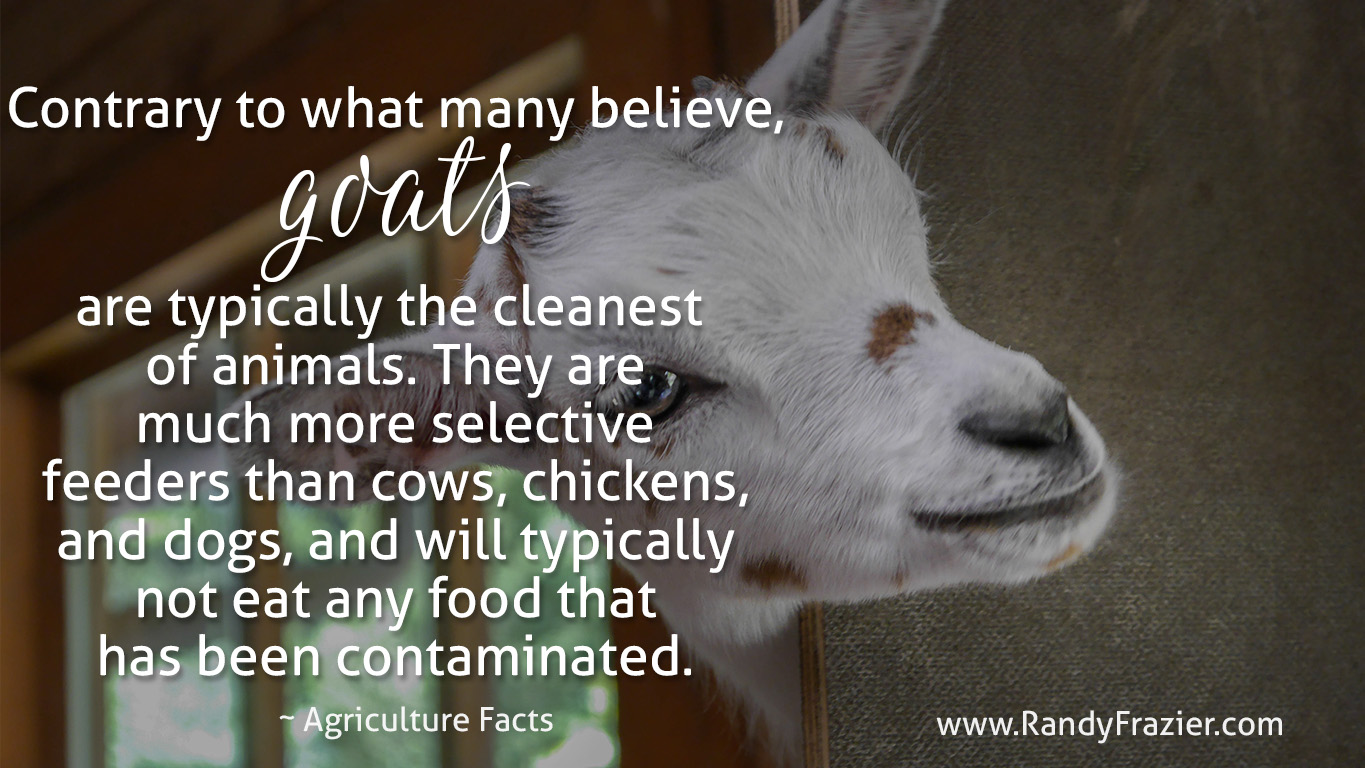
Contrary to what many believe, goats are typically the cleanest of animals. They are much more selective feeders than cows, chickens, and dogs, and will typically not eat any food that has been contaminated.
Ag Facts about Nebraska

Over 92 percent of land in Nebraska is used for farming, making it the state with the highest percentage of land dedicated to farming in America. ~ Agriculture Facts
Ag Facts about Farmers

American farmers are getting older. The average age is 58, up 1.2 years over the past decade. ~ Agriculture Facts
Ag Facts about Bananas

According to Science News, the coefficient of friction of a banana on hardwood flooring is 0.083, while ice has a coefficient of friction of 0.05, making a banana almost as slippery as ice. ~ Agriculture Facts
Ag Facts about Basil

Ancient Greeks and Romans thought basil would only grow if you screamed wild curses and shouted while sowing the seeds. ~ Agriculture Facts
Ag Facts about Vanilla

Vanilla is the only fruit-bearing member of the orchid family. The flower that produces vanilla beans only lasts one day. The beans are hand-picked, then cured, wrapped, and dried in a process that takes 4-6 months, making it the second-most expensive spice in the world, behind saffron. ~ Agriculture Facts
Ag Facts about Garlic
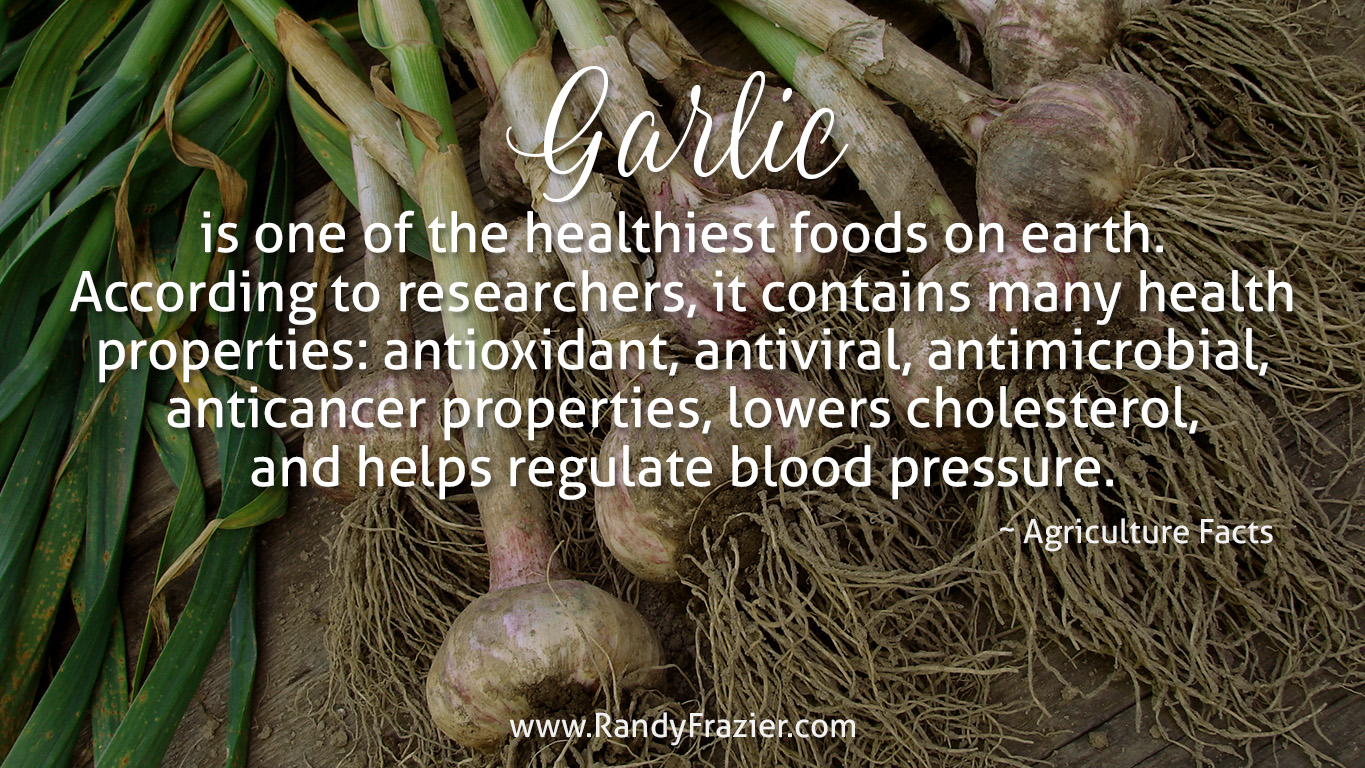
Garlic is one of the healthiest foods on earth. According to researchers, it contains many health properties: antioxidant, antiviral, antimicrobial, anticancer properties, lowers cholesterol, and helps regulate blood pressure. ~ Agriculture Facts
Ag Facts about Blackberries
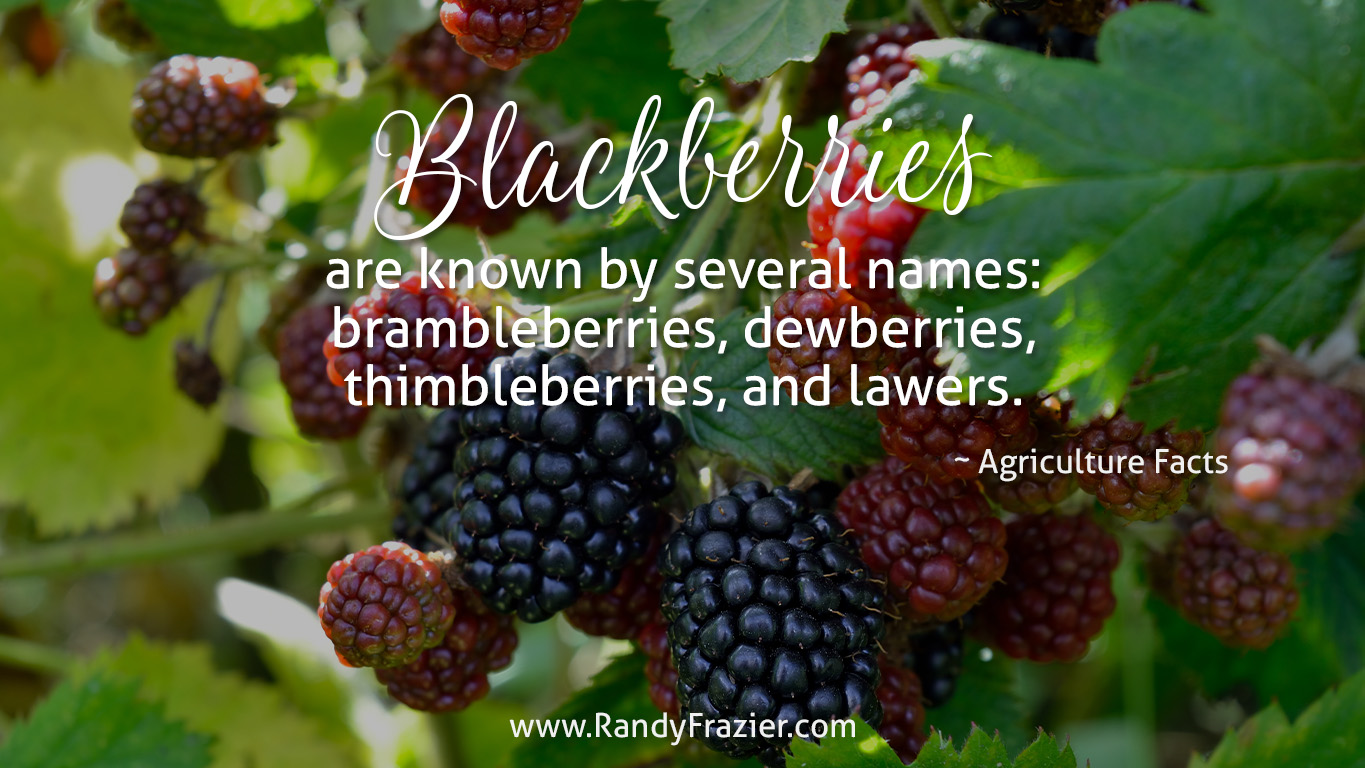
Blackberries are known by several names: brambleberries, dewberries, thimbleberries, and “lawers.” ~ Agriculture Facts
Ag Facts about Onions

Onions are the only commodity banned from futures trading in the United States. The Onion Futures Act was passed in 1958 after two traders cornered the onion market in Chicago, controlling 98 percent of all available onions. ~ Agriculture Facts
Ag Facts about Grapes

During the days of William the Conqueror, many United Kingdom residents would vacate their homes and travel to help with the grape harvest. This custom became known as “vacation.” ~ Agriculture Facts

 Address:
(Home Office)
29 Underwood Road,
Wye Mountain/
Bigelow, AR 72016
Address:
(Home Office)
29 Underwood Road,
Wye Mountain/
Bigelow, AR 72016 Email: